
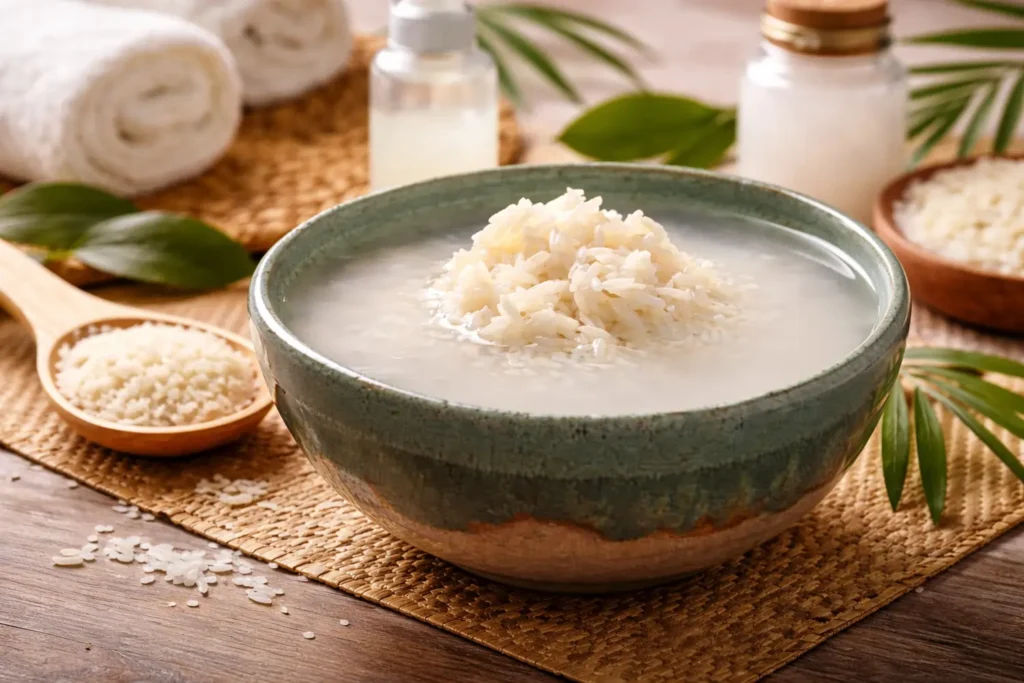
Rice water for skin is one of the simplest and most effective natural remedies used in traditional skincare. In today’s fast-paced world of chemical-based products, many people are turning back to gentle, time-tested solutions that support healthy, glowing skin naturally.
In Ayurveda, rice water is called Tandulodaka, and it has long been valued for its cooling, soothing, and nourishing properties. Unlike modern skincare solutions that often give quick but temporary results, Ayurvedic remedies focus on restoring balance, allowing the skin to heal and glow naturally.
This guide explores how rice water works, its Ayurvedic benefits, and how you can use it effectively in your daily skincare routine.
Table of Contents
What is Rice Water in Ayurveda?
Rice water is the starchy liquid obtained after soaking, boiling, or fermenting rice. Though simple in appearance, it is rich in nutrients like amino acids, vitamins, and antioxidants that support skin health.
From an Ayurvedic perspective, rice water is:
- Cooling (Sheetal) – helps reduce heat and inflammation
- Nourishing (Brimhana) – supports skin strength and texture
- Rejuvenating (Tvachya) – enhances natural glow
Because of these qualities, rice water is especially beneficial for calming irritated skin and maintaining overall balance.
Why Rice Water for skin Works: Ayurveda Meets Modern Science
Rice water works because it supports the skin rather than forcing change.
Modern research suggests it contains compounds like inositol, which helps improve skin elasticity and texture. It also provides antioxidants that protect the skin from environmental stress.
Ayurveda, however, focuses on how it behaves energetically. Rice water is gentle, balancing, and non-irritating — making it suitable for regular use without damaging the skin barrier.
Also read: Saffron (Kesar) in Ayurveda: Benefits & Daily Uses
Benefits of Rice Water for Skin: Natural Glow & Healthy Skin
Rice water offers multiple benefits when used consistently. Instead of dramatic overnight results, it provides gradual and long-lasting improvement.
1. Enhances Natural Skin Brightness
Rice water helps reduce dullness and uneven tone over time. It gently refines the skin surface, making your complexion appear fresher and more radiant without harsh exfoliation.
2. Provides Lightweight Hydration
It forms a thin, protective layer on the skin that helps retain moisture. This keeps the skin soft and smooth without making it greasy, making it suitable even for combination skin.
3. Soothes Irritation and Redness
Due to its cooling nature, rice water calms inflammation and sensitivity. It is particularly helpful for skin affected by heat, acne, or environmental stress.
4. Supports Skin Barrier Repair
Healthy skin depends on a strong barrier. Rice water strengthens this barrier gradually, improving resilience and reducing dryness or rough texture.
5. Helps Control Excess Oil
With regular use, rice water can help balance sebum production. This makes it beneficial for oily and acne-prone skin without stripping natural oils.
6. Improves Skin Texture Over Time
By supporting natural cell renewal, rice water helps the skin feel smoother and look more even with continued use.
Rice Water According to Your Dosha
Ayurveda emphasizes personalization, and rice water can be adapted based on your skin type:
- Pitta Skin (Sensitive, Acne-Prone):
Best suited for rice water. Its cooling nature reduces redness and irritation. - Vata Skin (Dry, Rough):
Works well when combined with hydrating ingredients like aloe vera to prevent dryness. - Kapha Skin (Oily, Congested):
Fermented rice water is more effective, helping control oil and keep pores clear.
How to Make Rice Water for skin at Home
Preparing rice water is simple and can be done in different ways depending on your preference and skin needs.
1. Soaked Rice Water (Gentle & Beginner-Friendly)
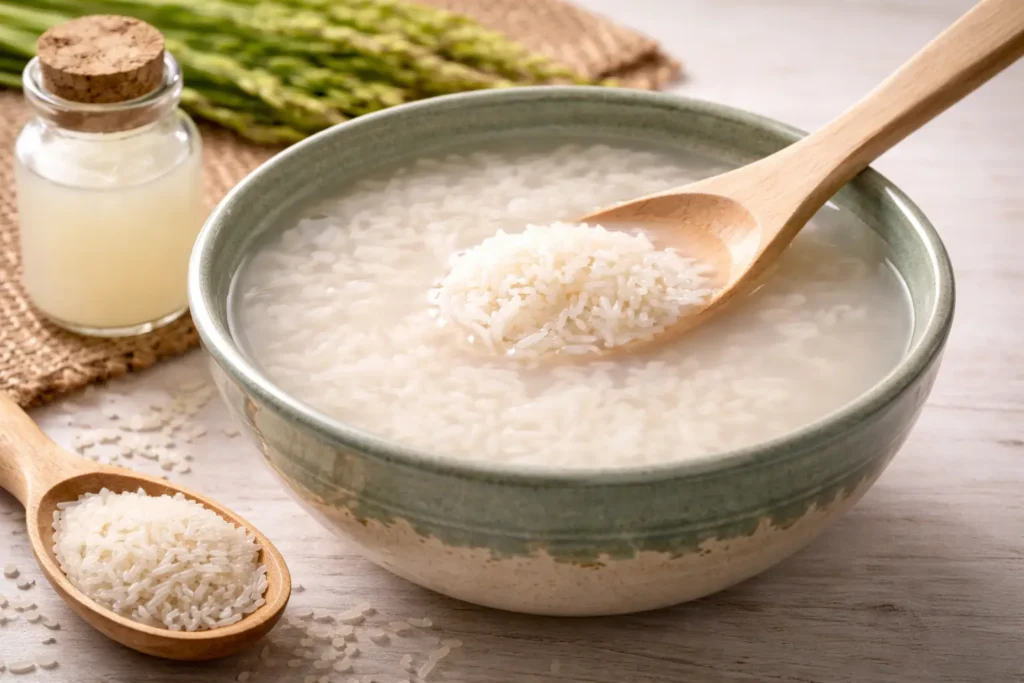
This is the easiest and most commonly used method.
Start by rinsing half a cup of rice thoroughly to remove impurities. Then add clean water and let it soak for about 30 to 60 minutes. During this time, nutrients begin to release into the water. Strain the liquid, and it is ready to use.
This version is mild and suitable for daily use, especially for sensitive skin.
2. Fermented Rice Water (Most Effective for Glow & Oil Control)
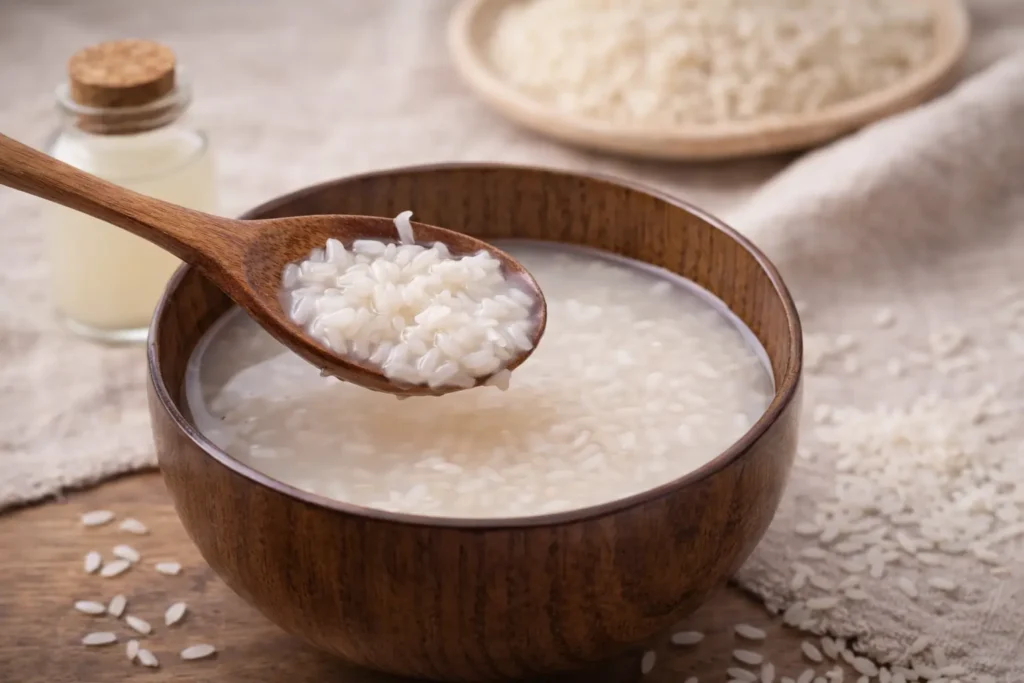
Fermented rice water for skin is considered more potent due to natural fermentation process. Fermentation enhances the potency of rice water.
After preparing soaked rice water, leave it covered at room temperature for 12–24 hours. As it ferments, beneficial compounds increase, making it more effective for improving skin texture and controlling oil.
Once fermented, store it in the refrigerator and dilute slightly before use if needed.
3. Boiled Rice Water (Nourishing & Rich)
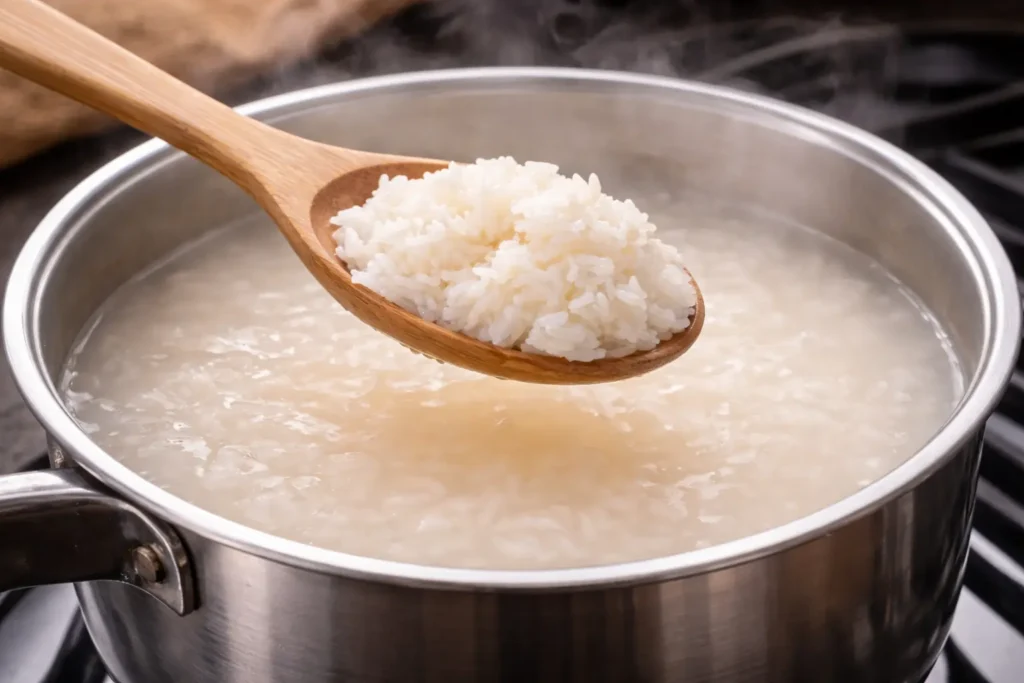
This method creates a thicker and more nourishing version.
Cook rice with extra water and strain the remaining liquid once the rice is done. After cooling, it can be used on the skin.
This type is especially beneficial for dry or tired skin that needs deeper nourishment.
How to Use Rice Water in Your Routine
Rice water can be easily included in your skincare routine without making it complicated.
- Use it as a toner after cleansing to refresh the skin
- Apply it as a face rinse for a soothing effect
- Mix it with aloe vera or multani mitti as a face mask
- Store it in a spray bottle as a facial mist for daily hydration
Consistency matters more than frequency. Regular use gives better results than overuse.
Also read: 7 Powerful Ayurvedic Drinks for Belly Fat Loss
Simple Routine for Clear and Glowing Skin
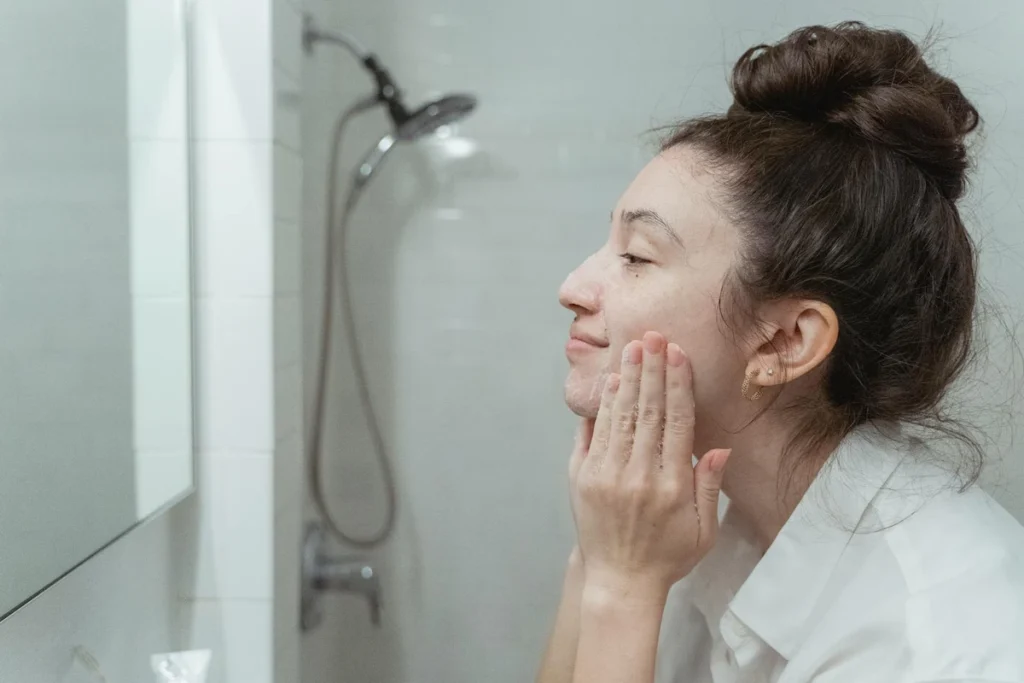
Begin by using rice water once daily after cleansing. Observe how your skin responds, and gradually increase to twice daily if suitable.
Pair it with a gentle moisturizer to maintain balance. Within one to two weeks, you may notice improved softness and brightness.
Over time, the results become more visible and long-lasting.
Also read: Ayurvedic Skincare for Glowing Skin: Timeless Beauty Rituals in Ancient Wisdom
Who Should Be Careful While Using Rice water for skin
While rice water is generally safe, some precautions are important.
- Very dry skin should always follow with a moisturizer
- Fermented rice water may be strong for sensitive skin
- Always perform a patch test before regular use
Ayurveda encourages awareness — observe your skin and adjust accordingly.
Enhancing Results with Ayurvedic Lifestyle
External care works best when supported by internal balance.
True skin health reflects both inner harmony and external care. Simple daily skincare rituals, when combined with an Ayurvedic lifestyle, can enhance overall results.
Proper digestion, hydration, and a clean diet play a key role in skin health. When your body is balanced, natural remedies like rice water become even more effective.
Quick Benefits at a Glance
- Helps improve natural skin glow and brightness
- Soothes irritated, sensitive, and acne-prone skin
- Supports clear, balanced, and healthy-looking skin
- Provides lightweight hydration without making skin oily
- Works as a gentle, natural toner for daily use
Trusted Source: According to Healthline – Rice water has traditionally been used to soothe and support skin, though scientific evidence is still evolving.
Conclusion
Rice water is a simple yet powerful example of how traditional wisdom can still serve modern needs. Rooted in Ayurveda, it offers a gentle and natural way to support healthy, glowing skin.
With consistent use and the right approach, rice water for skin can help you achieve a complexion that feels balanced, calm, and naturally radiant — without relying on harsh chemicals.
FAQs
1. Is rice water good for skin?
Rice water is traditionally used as a gentle skincare remedy. It may help soothe irritation, improve skin texture, and support a natural glow when used regularly. However, results can vary from person to person.
2. How often should I use rice water on my face?
You can use rice water once daily, especially as a toner after cleansing. If your skin responds well, it may be used twice a day. It is best to start slowly and observe your skin’s reaction.
3. Can rice water help with acne?
Rice water may help calm inflammation and reduce excess oil, which can support acne-prone skin. However, it is not a medical treatment, and severe acne may require professional care.
4. Which type of rice water is best for skin?
Soaked rice water is the most gentle and suitable for beginners. Fermented rice water may be more potent, while boiled rice water is richer and better for dry skin.
5. Can rice water brighten skin naturally?
Rice water may help improve dullness and uneven skin tone over time. It supports natural skin radiance rather than providing instant or artificial whitening.
6. How long does it take to see results from rice
With regular use, some people may notice smoother and fresher-looking skin within 1–2 weeks. Consistency is more important than quick results.
7. Can I leave rice water on my face overnight?
It is generally better to use rice water as a toner or rinse rather than leaving it overnight. Always follow with a moisturizer to maintain skin balance.
8. Is rice water safe for all skin types?
Rice water is usually gentle and suitable for most skin types. However, people with very sensitive skin should do a patch test before regular use.
9. Can rice water remove dark spots?
Rice water may help improve overall skin tone and texture, which can make dark spots appear lighter over time. However, it works gradually and is not a quick fix.
Disclaimer: This article is for informational and educational purposes only. It is based on traditional practices and general wellness knowledge. It is not intended to diagnose, treat, cure, or prevent any disease. Please consult a qualified professional before making any health-related changes.