
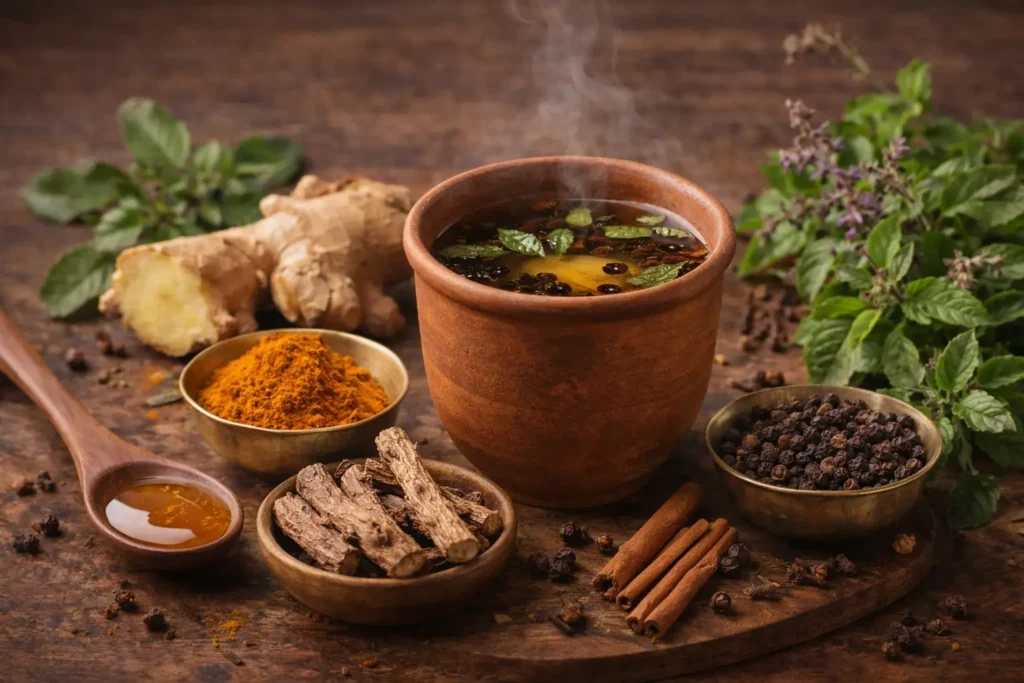
Cold and cough may appear to be minor health concerns, but they are among the most common reasons people seek medical care. Seasonal transitions, pollution, weakened immunity, viral infections, and lifestyle imbalances contribute to frequent episodes of respiratory discomfort. While over-the-counter medications provide temporary relief, they often suppress symptoms without addressing the root cause.
This is where Ayurvedic home remedies for cold and cough offer a holistic and time-tested solution. Ayurveda, the ancient Indian system of medicine, approaches respiratory issues through balancing the body’s internal energies, improving digestion, strengthening immunity, and clearing accumulated toxins.
Unlike quick-fix treatments, Ayurvedic remedies focus on restoring internal harmony. They work gently yet effectively to reduce congestion, soothe throat irritation, and support the body’s natural defense system.
Cold and cough are common problems. Ayurvedic home remedies for cold and cough help reduce symptoms naturally without side effects.
In this comprehensive guide, you will discover how Ayurveda understands cold and cough, the most powerful herbs and remedies, effective kadha recipes, dietary recommendations, lifestyle corrections, prevention strategies, and when medical consultation becomes necessary.
Let us begin by understanding the Ayurvedic perspective.
Understanding Cold and Cough in Ayurveda

In Ayurveda, health depends on the balance of three fundamental energies known as doshas — Vata, Pitta, and Kapha. Each dosha governs specific physiological functions.
Cold and cough primarily result from Kapha dosha imbalance, sometimes accompanied by Vata aggravation.
Kapha represents stability, lubrication, and immunity in the body. It controls mucus production and protects respiratory tissues. However, when Kapha becomes excessive due to improper diet, weather changes, or weak digestion, it accumulates in the lungs and sinuses. This leads to symptoms such as congestion, phlegm, heaviness in the chest, and productive cough.
When Vata also becomes aggravated, dryness occurs in the respiratory tract. This may cause a dry cough, irritation, and throat discomfort.
Ayurvedic treatment for cold and cough focuses on:
- Reducing excess Kapha
- Balancing Vata
- Improving digestive fire (Agni)
- Eliminating toxins (Ama)
- Strengthening natural immunity
This holistic approach explains why Ayurvedic home remedies for cold and cough remain effective even today.
Root Causes of Cold and Cough According to Ayurveda
Understanding the root cause is essential for long-term relief.
Weak Digestive Fire (Mandagni)
In Ayurveda, poor digestion leads to toxin accumulation in the body. These toxins weaken immunity and create favorable conditions for respiratory infections.
Excess Cold and Heavy Foods
Consumption of cold drinks, ice cream, curd at night, fried foods, and sugary items increases Kapha accumulation.
Seasonal Changes
During winter and monsoon, Kapha naturally increases in the environment. If lifestyle adjustments are not made, susceptibility to cold and cough rises.
Lack of Sleep and Stress
Chronic stress weakens immune resilience, making the body prone to viral infections.
Exposure to Pollution and Dust
Environmental toxins irritate respiratory passages and disturb Kapha balance.
By correcting these underlying causes, Ayurvedic treatment provides sustainable relief.
Why Choose Ayurvedic Home Remedies for Cold and Cough?
Modern medications often provide symptomatic relief but may cause drowsiness, acidity, or dependency when used frequently.
In contrast, Ayurvedic home remedies for cold and cough offer multiple benefits:
They are natural and derived from herbs and kitchen spices.
They enhance immunity instead of suppressing symptoms.
They are safe when used correctly.
They improve digestion and metabolism.
They support long-term respiratory health.
Ayurveda does not treat cold and cough as isolated issues. Instead, it strengthens the body’s resistance to future infections.
7 Powerful Ayurvedic Home Remedies for Cold and Cough
Cold and cough in Ayurveda are mainly caused by Kapha imbalance and weak digestive fire (Mandagni). These remedies work by clearing mucus, improving digestion, and strengthening immunity.
Also read: 7 Ayurvedic Remedies for Gas, Acidity & Bloating
1. Tulsi Remedy (Holy Basil Therapy)
How It Works
Tulsi is considered a natural immunity enhancer in Ayurveda. It reduces excess Kapha, clears respiratory passages, and helps the body fight viral infections.
How to Make Tulsi Tea
- Take 7–8 fresh tulsi leaves.
- Boil 1½ cups of water.
- Add tulsi leaves and simmer for 8–10 minutes.
- Strain the liquid.
- Add 1 teaspoon honey (after cooling slightly).
How to Take
Drink warm twice daily — morning and evening.
2. Ginger–Honey Mixture
How It Works
Ginger improves digestion and melts accumulated mucus. Honey soothes throat irritation and acts as a natural cough suppressant.
How to Make
- Grate fresh ginger and extract 1 teaspoon juice.
- Mix with 1 teaspoon raw honey.
- Stir well.
How to Take
Consume 2 times daily after meals for 3–4 days.
3. Golden Milk (Haldi Milk)
How It Works
Turmeric has anti-inflammatory and antimicrobial properties. It reduces throat swelling and strengthens immunity.
How to Make
- Heat 1 glass milk.
- Add ½ teaspoon turmeric powder.
- Add a pinch of black pepper.
- Stir well.
How to Take
Drink before bedtime for better relief from night cough.
4. Mulethi (Licorice) Drink
How It Works
Mulethi acts as a natural expectorant. It loosens mucus and soothes inflamed throat tissues.
How to Make
- Add ½ teaspoon mulethi powder to 1 cup warm water.
- Stir properly.
OR
Boil a small piece of mulethi root in water for 5 minutes.
How to Take
Drink once daily after lunch.
5. Herbal Kadha for Deep Relief
How It Works
Kadha works on the root cause by balancing Kapha and detoxifying the respiratory system.
Ingredients
- 5 tulsi leaves
- 1 inch ginger
- 3 black peppercorns
- Small cinnamon stick
- 2 cups water
Method
- Crush all ingredients lightly.
- Boil in water until reduced to half.
- Strain and add honey after cooling slightly.
How to Take
Drink once daily during infection.
6. Black Pepper with Ghee
How It Works
Black pepper helps remove thick mucus from chest. Ghee nourishes dry throat tissues.
How to Make
- Mix ¼ teaspoon black pepper powder
- Add 1 teaspoon pure cow ghee
How to Take
Consume in the morning on empty stomach for 3 days.
7. Salt Water Gargle Therapy
How It Works
Warm salt water reduces throat inflammation and kills bacteria.
How to Make
- Add ½ teaspoon rock salt to warm water.
- Mix well.
How to Take
Gargle 2–3 times daily.
If fever lasts more than 3–5 days, breathing becomes difficult, or cough persists for more than 2 weeks, seek medical advice.
Most Effective Ayurvedic Herbs for Cold and Cough Relief
Tulsi (Holy Basil)
Tulsi holds a sacred and medicinal place in Ayurveda. It possesses antiviral, antibacterial, and anti-inflammatory properties.
Regular consumption of tulsi tea helps clear mucus, reduce throat irritation, and improve respiratory immunity. Tulsi stimulates digestion and removes toxins, preventing recurrence of infections.
Drinking warm tulsi-infused water twice daily can significantly reduce cold severity.
Ginger (Shunthi)
Ginger is a powerful warming herb that reduces Kapha accumulation. Its active compounds relieve inflammation, clear congestion, and stimulate digestion.
Fresh ginger tea is highly effective in relieving throat discomfort and productive cough. It improves circulation and supports immune response.
For dry cough, ginger combined with honey provides soothing relief.
Also read: Ginger Water Benefits: Uses, Side Effects, and Best Time to Drink
Mulethi (Licorice Root)
Mulethi acts as a natural expectorant. It soothes inflamed respiratory tissues and reduces persistent cough.
It is especially helpful in dry, irritating cough where throat inflammation is prominent. Drinking mulethi decoction supports faster recovery.
Turmeric (Haldi)
Turmeric is widely known for its antibacterial and immune-boosting properties. It reduces inflammation in the respiratory tract and prevents secondary infections.
Turmeric milk at bedtime helps reduce nighttime coughing and strengthens immunity.
Also read: Turmeric Milk Benefits: A Simple Ayurvedic Drink for Daily Wellness
Black Pepper
Black pepper enhances metabolism and clears excessive mucus. It acts as a natural decongestant and improves respiratory function.
When mixed with honey, it works effectively in managing productive cough.
Cinnamon and Clove
Both cinnamon and clove contain antimicrobial compounds. They provide warmth to the body and help break down accumulated Kapha.
These spices are commonly used in traditional kadha preparations.
Source: Healthline – Ayurvedic Medicine for cough
Ayurvedic Kadha for Cold and Cough: Complete Preparation Guide
Kadha is one of the most powerful Ayurvedic home remedies for cold and cough. It combines multiple herbs to provide synergistic healing.
Ingredients
Fresh ginger
Tulsi leaves
Black pepper
Cinnamon stick
Cloves
Mulethi
Water
Honey (added after cooling slightly)
Method
Boil the herbs in water and reduce the quantity by half. Strain and consume warm.
This herbal decoction clears mucus, reduces throat pain, improves digestion, and boosts immunity.
Drinking kadha once or twice daily during infection speeds up recovery.
Diet Plan During Cold and Cough
Diet is crucial in Ayurvedic healing.
During cold and cough, digestion becomes weak. Therefore, heavy, oily, and cold foods should be avoided.
Warm vegetable soups, khichdi, lightly spiced herbal teas, and cooked vegetables are recommended. Warm water should replace cold beverages.
Avoid curd at night, deep-fried snacks, processed sugar, and refrigerated foods. These increase Kapha and delay recovery.
A balanced diet helps eliminate toxins and supports the effectiveness of Ayurvedic home remedies for cold and cough.
Lifestyle Corrections for Faster Recovery
Adequate rest is essential. The body heals during sleep.
Keep the body warm and avoid exposure to cold air. Cover the chest and neck properly.
Practice gentle breathing exercises such as Anulom Vilom to improve lung function.
Avoid smoking and alcohol consumption as they weaken respiratory tissues.
Simple daily discipline significantly enhances healing outcomes.
Ayurvedic home remedies for cold and cough work best when combined with proper diet and lifestyle discipline.
Managing Different Types of Cough with Ayurveda
Dry Cough (Vata Type)
Characterized by throat dryness and irritation. Remedies include honey with ginger, mulethi tea, and warm milk with turmeric.
Productive Cough (Kapha Type)
Characterized by mucus production. Black pepper, tulsi tea, and steam inhalation are helpful.
Understanding the type of cough allows targeted treatment.
Immunity Building Through Ayurveda
Prevention is a major principle in Ayurveda.
Daily consumption of chyawanprash, herbal teas, and seasonal fruits improves immunity. Regular yoga and pranayama enhance lung capacity.
Maintaining digestive strength prevents toxin formation and reduces infection frequency.
Strengthening immunity reduces dependence on medications.
Steam Inhalation and Nasal Cleansing

Steam inhalation loosens thick mucus and relieves sinus pressure.
Adding a few drops of eucalyptus oil enhances benefits.
Neti kriya (nasal cleansing) under proper guidance helps maintain nasal hygiene and prevents frequent infections.
Special Considerations for Children and Elderly
Children require mild remedies. Avoid strong spices and ensure hydration.
Elderly individuals may have weaker immunity. Monitor symptoms closely and consult healthcare professionals when needed.
When to Seek Medical Help
While Ayurvedic home remedies for cold and cough are effective for mild conditions, professional consultation is necessary if:
Fever persists beyond three days.
Breathing difficulty occurs.
Chest pain develops.
Cough lasts more than two weeks.
Blood appears in sputum.
Early medical evaluation prevents complications.
Conclusion
Cold and cough may be common, but they should not be ignored. Instead of repeatedly relying on synthetic medications, adopting Ayurvedic home remedies for cold and cough offers a safe, natural, and holistic approach.
By balancing doshas, improving digestion, strengthening immunity, and correcting lifestyle habits, Ayurveda provides sustainable respiratory health.
Incorporating tulsi, ginger, mulethi, turmeric, and traditional kadha into your routine can transform your approach to seasonal illnesses.
At Ayusenz, we believe in empowering you with authentic, research-backed natural wellness knowledge.
Stay informed. Stay balanced. Stay healthy.
FAQs
1. What are the best Ayurvedic home remedies for cold and cough?
The best Ayurvedic home remedies for cold and cough include drinking warm herbal kadha made with tulsi, ginger, black pepper, and turmeric. Steam inhalation, honey with ginger juice, turmeric milk, and warm saltwater gargling are also highly effective. These remedies help balance Kapha dosha, reduce mucus, and strengthen immunity naturally.
2. How does Ayurveda explain cold and cough?
According to Ayurveda, cold and cough are mainly caused by an imbalance in Kapha dosha, sometimes combined with Vata aggravation. Excess Kapha leads to mucus accumulation in the respiratory tract, resulting in congestion, heaviness, and productive cough. Ayurvedic treatment focuses on restoring dosha balance and improving digestion (Agni).
3. How many days does it take for Ayurvedic remedies to work?
Mild cold and cough symptoms often improve within 2 to 4 days when using Ayurvedic home remedies consistently. However, the recovery time depends on immunity, lifestyle, and severity. Regular use of warm herbal drinks and proper rest accelerates healing.
4. Is kadha effective for cold and cough?
Yes, Ayurvedic kadha is one of the most effective home remedies for cold and cough. Ingredients like tulsi, ginger, black pepper, cinnamon, and mulethi help reduce inflammation, clear mucus, and boost immunity. Drinking kadha once or twice daily during seasonal changes helps prevent recurrent infections.
5. Can children take Ayurvedic remedies for cold and cough?
Children can take mild Ayurvedic remedies such as warm turmeric milk, honey (for children above one year), and gentle steam inhalation. Strong spices should be used cautiously. It is advisable to consult a healthcare professional before giving herbal formulations to young children.
6. Is steam inhalation good for cough and nasal congestion?
Steam inhalation is highly beneficial for relieving nasal congestion and loosening thick mucus. It opens blocked sinuses, reduces sinus pressure, and improves breathing. Adding a few drops of eucalyptus oil may enhance the effects.
7. When should I see a doctor for cold and cough?
Medical attention is necessary if symptoms last more than 7–10 days, if there is high fever, difficulty breathing, chest pain, wheezing, or persistent cough with blood. Ayurvedic home remedies are supportive but not a substitute for emergency care.
Disclaimer: This article is for informational and educational purposes only. It is based on traditional practices and general wellness knowledge. It is not intended to diagnose, treat, cure, or prevent any disease. Please consult a qualified professional before making any health-related changes.