

Gas, acidity, and bloating are some of the most common digestive complaints today. Many people experience a burning sensation after meals, heaviness in the stomach, frequent burping, or uncomfortable bloating—sometimes even daily.
The good news is that in many cases, these issues can be managed with simple changes in diet and lifestyle. Ayurveda, India’s traditional wellness system, focuses on improving digestion by supporting the body’s natural balance and strengthening Agni (digestive fire).
Ayurvedic remedies for gas, acidity and bloating can help improve digestion naturally and reduce discomfort after meals.
In this Ayusenz guide, we’ll explore the common causes of gas and acidity, how Ayurveda explains these problems, and the most practical Ayurvedic home remedies and diet tips that are gentle, safe, and easy to follow.
Why Gas, Acidity & Bloating Are So Common Today
Modern lifestyle habits often disturb digestion without us realizing it. Skipping meals, eating too fast, consuming spicy or oily food regularly, and stress can all affect the stomach.
Some of the most common causes include:
- Eating in a hurry or overeating
- Late-night dinner and irregular meal timings
- Excess spicy, fried, or processed foods
- Drinking cold water during meals
- Too much tea/coffee
- Lack of physical activity
- Stress, anxiety, and disturbed sleep
When digestion becomes weak or overloaded, the stomach struggles to process food properly. This can lead to gas formation, acid reflux, and bloating.
Symptoms You Should Not Ignore

Gas and acidity can feel different for different people. Some may feel more burning, while others feel more bloating and heaviness.
Common symptoms include:
- Burning in the chest or throat (heartburn)
- Sour burps or acid reflux
- Stomach heaviness after eating
- Frequent burping and gas
- Tightness or swelling in the abdomen
- Mild nausea or discomfort
- Constipation or irregular bowel movement
If these symptoms happen occasionally, they are usually linked to diet and routine. But if they happen frequently, it’s a sign that digestion needs attention.
Along with diet changes, ayurvedic remedies for gas acidity and bloating work best when followed daily.
Ayurvedic Understanding: Pitta and Vata Imbalance
Ayurveda connects digestion with balance in the body’s doshas.
- Acidity is often linked to Pitta imbalance, which may cause burning, irritation, and sourness.
- Gas and bloating are commonly linked to Vata imbalance, which may cause dryness, bloating, and discomfort.
Instead of focusing only on quick relief, Ayurveda focuses on improving digestion and supporting gut balance through food choices, daily habits, and gentle herbs.
If you face frequent digestive issues, ayurvedic remedies for gas acidity and bloating can support long-term gut balance.
Ayurvedic Home Remedies That Support Digestion Naturally
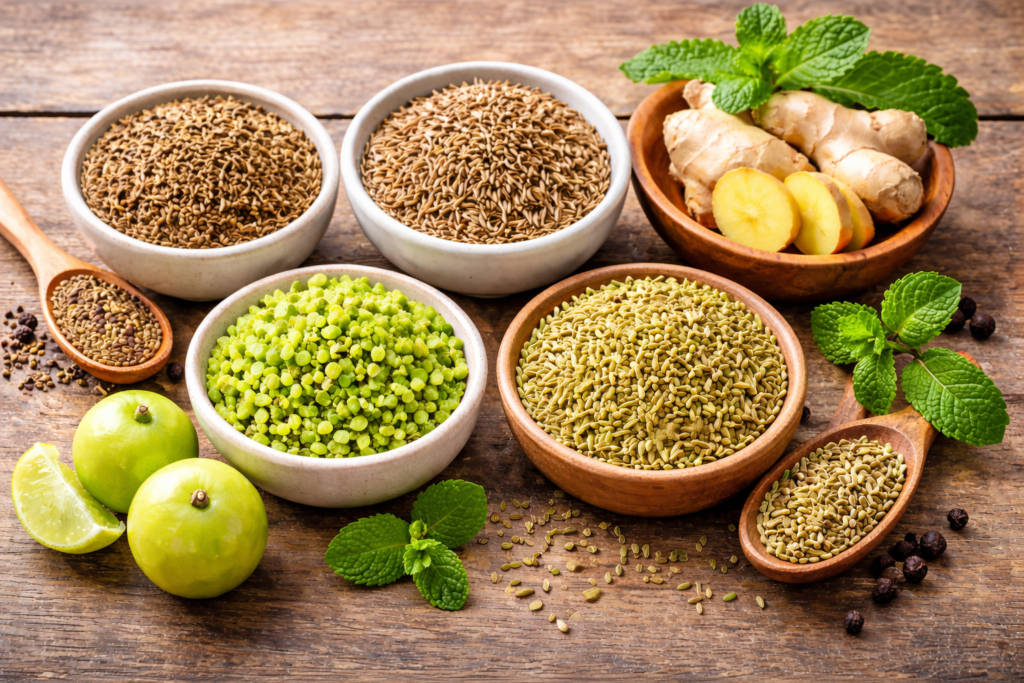
Many traditional Ayurvedic remedies are simple ingredients already available in Indian kitchens. These remedies are not meant to replace medical treatment, but they can support digestion in a natural way when used correctly.
Note: If you have severe acidity, ulcers, long-term digestive issues, or take regular medication, consult a doctor before trying remedies frequently.
1) Ajwain: A Traditional Remedy for Gas
Ajwain (carom seeds) is widely used in Indian households for gas and indigestion. It is known for its strong digestive support.
How to use:
Chew ½ teaspoon ajwain with a pinch of black salt, or take it with warm water.
Many people feel relief because it helps reduce bloating and supports digestion after heavy meals.
2) Jeera Water: Simple and Gentle for Daily Use
Jeera (cumin) water is one of the easiest Ayurvedic drinks for digestion. It is gentle, and many people prefer it because it doesn’t feel harsh on the stomach.
How to make:
Boil 1 teaspoon cumin seeds in 1 glass water.
Sip it warm after meals.
It can help reduce heaviness and support better digestion, especially after oily or spicy food.
3) Saunf: A Cooling After-Meal Habit
Saunf (fennel seeds) is often used after meals in Indian tradition. It can feel soothing and refreshing, especially when acidity is triggered by spicy food.
How to use:
Chew ½ to 1 teaspoon saunf after meals.
This small habit can support digestion and reduce the chances of sour burps.
4) Ginger: Helpful for Indigestion and Bloating
Ginger is known to support digestion and reduce heaviness. It can be useful when bloating is caused by slow digestion.
You can add small amounts of ginger to warm water, tea, or meals.
If your acidity is very high, avoid excess ginger and keep it mild.
5) Amla: A Cooling Ayurvedic Ingredient for Acidity
Amla (Indian gooseberry) is often considered cooling and supportive for Pitta balance.
It may help when acidity is linked to heat, burning sensation, and irritation.
Amla can be consumed as juice (in small quantity) or as amla powder mixed in water.
6) Chaas (Buttermilk): Light and Digestive-Friendly
Buttermilk (chaas) is a traditional drink that many people find helpful for digestion, especially after lunch.
Simple recipe:
1 glass chaas + roasted cumin powder + pinch of rock salt
It is light, refreshing, and supports gut comfort without feeling heavy.
7) Triphala: A Gentle Night Routine for Gut Health
Triphala is widely used in Ayurveda for supporting digestion and bowel regularity. It may help reduce bloating caused by constipation.
How to use:
½ teaspoon Triphala powder with warm water at night.
Avoid during pregnancy or if you have loose stools.
For quick relief, ayurvedic remedies for gas acidity and bloating like jeera water and ajwain can be helpful.
These ayurvedic remedies for gas acidity and bloating are safe, gentle, and easy to follow at home.
Ayurvedic remedies for gas acidity and bloating can help reduce heaviness, burning sensation, and discomfort after meals.
Diet Tips to Prevent Gas and Acidity (Ayurvedic Style)

Remedies can help, but diet is what creates long-term improvement. Ayurveda strongly recommends warm, fresh, and light meals for better digestion.
With the right diet and daily habits, Ayurvedic remedies for gas, acidity and bloating work long-term.
Best Foods for Digestion
Try including more of these:
- Warm, freshly cooked meals
- Moong dal khichdi
- Rice with light dal
- Steamed vegetables
- Lauki, pumpkin, ridge gourd
- Papaya (in moderation)
- Cumin, coriander, and fennel in cooking
Foods That Often Trigger Gas and Acidity
Reduce or avoid:
- Very spicy food
- Deep-fried snacks
- Bakery items and packaged foods
- Cold drinks and ice water
- Too much tea/coffee
- Late-night heavy dinner
A simple rule Ayurveda supports:
Eat warm, light, and on time.
Ayurvedic remedies for gas acidity and bloating can help reduce heaviness, burning sensation, and discomfort after meals.
Daily Habits That Improve Digestion Naturally

Even the best diet won’t help if lifestyle is disturbed. These small habits can make a big difference:
- Eat slowly and chew properly
- Avoid overeating
- Don’t lie down immediately after meals
- Take a short walk after eating
- Sleep on time and reduce late-night eating
- Manage stress through breathing or meditation
Ayurvedic remedies for gas acidity and bloating work best when you follow a light diet and regular meal timings
Many digestive problems reduce naturally when stress levels and sleep improve.
When You Should Consult a Doctor
Home remedies are helpful for mild and occasional discomfort, but medical advice is important if symptoms are frequent or severe.
See a doctor if you experience:
- Acidity for more than 2 weeks regularly
- Severe burning or chest pain
- Vomiting or blood in stool
- Sudden weight loss
- Difficulty swallowing
- Strong stomach pain or long-term constipation
Trusted Source: NHS guide on indigestion
Conclusion
Gas, acidity, and bloating are often linked to weak digestion and lifestyle imbalance. Ayurveda focuses on strengthening digestion naturally with simple habits, gentle remedies, and the right diet.
If you want long-term relief, start small: warm water, light meals, early dinner, and a calm routine.
This guide shares ayurvedic remedies for gas acidity and bloating, including herbs, home drinks, and lifestyle tips.
Stay connected with Ayusenz for more safe, practical, and Ayurveda-inspired wellness guides.
Also Read: Vitamin D Deficiency Symptoms & Natural Sources
Disclaimer: This article is for informational and educational purposes only. It is based on traditional practices and general wellness knowledge. It is not intended to diagnose, treat, cure, or prevent any disease. Please consult a qualified professional before making any health-related changes.